Portable Power Station Buying Guide (2026): The Complete Technical & Practical Handbook for Camping, Home Backup, and Blackouts
Power outages. Camping trips. Van life. Remote job sites. Emergency preparedness.
Portable power stations have quietly become one of the most practical pieces of modern gear you can own. But with so many brands, battery types, capacities, and confusing specs, choosing the right one can feel overwhelming – especially when marketing materials obscure critical technical limitations.
This comprehensive, technically-grounded buying guide bridges the gap between engineering reality and practical use. We’ll decode the specs that actually matter while avoiding the fluff that leads to buyer’s remorse. You’ll learn:
- Why a “1000Wh” rating doesn’t mean 10 hours of runtime for your 100W device
- How inverter waveform quality can silently destroy your CPAP machine
- Why LiFePO4 isn’t just “better”—it’s chemically superior for 90% of users
- The hidden 15% efficiency tax that evaporates your expected runtime
- Cold weather limitations that render units useless during winter blackouts
By the end, you’ll possess the technical literacy to cut through marketing hype and select a power station that actually performs as promised – backed by physics, not promises.
What Is a Portable Power Station? (The Engineering Reality)
A portable power station is a self-contained energy ecosystem comprising four critical subsystems working in concert:
- Battery pack: Energy storage (lithium cells in series/parallel configuration)
- Battery Management System (BMS): The “brain” monitoring cell voltage, temperature, and state of charge
- Inverter: Converts DC battery power to AC household power (critical waveform quality discussion below)
- Charge controller: Manages input from wall outlet, car port, or solar panels
Unlike gas generators, portable power stations:
✅ Operate silently (no moving parts beyond cooling fans)
✅ Produce zero emissions (safe for indoor use)
✅ Require no fuel logistics
✅ Support renewable charging (solar)
✅ Deliver instant power (no startup delay)
Critical limitation: They store finite energy. A 1000Wh unit contains exactly 1/36th the energy of a single gallon of gasoline. This isn’t a flaw—it’s physics. Power stations excel at targeted backup, not whole-house replacement.
DEEP DIVE: Battery Chemistry — Why LiFePO4 Dominates in 2026
The Three Contenders (and Why Two Are Fading)
1. NMC (Lithium Nickel Manganese Cobalt Oxide) — The Legacy Standard
Chemistry: LiNiMnCoO₂ cathode with graphite anode
Energy density: 150–220 Wh/kg (lighter for same capacity)
Cycle life: 500–800 cycles to 80% capacity
Thermal runaway risk: Moderate (requires robust BMS protection)
Cost trajectory: Declining but plateauing
How degradation works:
During each charge/discharge cycle, microscopic cracks form in the cathode crystal structure. Nickel-rich formulations (NMC 811) accelerate this degradation. After ~600 cycles, internal resistance increases by 30–40%, causing:
- Reduced usable capacity
- Voltage sag under load (devices shut down prematurely)
- Heat generation during operation
Best use case: Ultralight backpacking where every ounce matters (e.g., 280Wh units under 7 lbs). For stationary backup? Avoid.
2. LiFePO₄ (Lithium Iron Phosphate) — The 2026 Standard
Chemistry: LiFePO₄ cathode with graphite anode
Energy density: 90–130 Wh/kg (20–30% heavier than NMC for same capacity)
Cycle life: 3,000–5,000 cycles to 80% capacity
Thermal runaway risk: Extremely low (stable up to 270°C vs. 150°C for NMC)
Cost trajectory: Dropped 35% since 2024—now cost-competitive at mid-range
Why the chemistry matters:
The phosphate-oxygen bond in LiFePO₄ has exceptionally high bond dissociation energy. When overheated or damaged, it doesn’t release oxygen to feed thermal runaway—a fundamental safety advantage. Cycle life superiority comes from minimal cathode volume change (<4%) during lithium ion insertion/extraction versus 7–10% in NMC.
Real-world implication:
A $900 LiFePO₄ unit (2,000 cycles) delivers 2.8x more total energy throughput than a $700 NMC unit (700 cycles) before reaching 80% capacity. The “premium” pays for itself in 2–3 years for regular users.
3. Sodium-Ion (Na-Ion) — The 2026 Emerging Contender
Chemistry: Hard carbon anode with Prussian blue analog or layered oxide cathode
Energy density: 70–100 Wh/kg (heaviest option)
Cycle life: 2,000–4,000 cycles (early data)
Thermal runaway risk: Near-zero (sodium doesn’t react violently with air/water)
Cost trajectory: 20–30% cheaper than LiFePO₄ at scale (abundant raw materials)
2026 market status:
CATL began shipping Na-ion power stations (EcoFlow Delta Nano) in Q1 2026. Best suited for:
- Stationary home backup (weight irrelevant)
- Extreme cold climates (-20°C operation without heating)
- Budget-conscious buyers prioritizing safety over portability
Tradeoff: 30% heavier than equivalent LiFePO₄. Not for camping/van life yet.
DEEP DIVE: Inverter Technology – Pure Sine Wave vs. Modified Sine Wave (The Physics of Power Quality)
Why Waveform Quality Matters More Than Wattage
Your wall outlet delivers pure sine wave AC power—a smooth, continuous oscillation at 60Hz (U.S.) or 50Hz (EU). This waveform is essential for devices with:
- AC induction motors (fridge compressors, fans)
- Switch-mode power supplies with PFC (Power Factor Correction)
- Medical electronics (CPAP, oxygen concentrators)
Modified sine wave (MSW) approximates this with a stepped square wave:
Pure Sine Wave:      ~~~~~~~ (smooth curve)
Modified Sine Wave:  _|‾|_|‾|_ (stepped approximation)
The Hidden Damage Mechanism
MSW contains high total harmonic distortion (THD)—typically 30–50% versus <3% for pure sine wave. These harmonics cause:
- Motor overheating: Harmonics induce eddy currents in motor windings, converting to waste heat. A fridge compressor running on MSW may overheat by 25–40°F, shortening lifespan by 50%+
- Transformer saturation: In devices with internal transformers (laptop chargers), harmonics drive cores into saturation, causing audible buzzing and efficiency loss
- PFC circuit failure: Modern electronics use active PFC to draw current smoothly. MSW confuses these circuits, triggering shutdowns or permanent damage
CPAP-specific risk: ResMed and Philips explicitly void warranties when devices are powered by non-pure-sine sources. Humidifier heating elements cycle erratically on MSW, causing error codes or shutdowns mid-sleep.
2026 Market Reality
- Budget tier (<$400): Still contains MSW units (avoid entirely)
- Mid-tier ($400–$1,200): Pure sine wave now standard (verify spec sheet—don’t trust “AC output” claims alone)
- Premium tier: Pure sine wave with THD <2% (measurable difference for sensitive audio/video gear)
Verification tip: Search “[model name] teardown pure sine wave” on YouTube. Engineers often oscilloscope-test waveforms in teardown videos.
The Efficiency Tax: Why Your 1000Wh Unit Only Delivers 850WhMarketing specs quote battery capacity, not usable energy delivered to devices. Three conversion losses eat 10–20% of your capacity:
| Conversion Stage | Typical Efficiency | Loss Example (1000Wh unit) |
|---|---|---|
| DC-DC (12V USB) | 92–95% | 50–80Wh loss |
| DC-AC (inverter) | 88–93% | 70–120Wh loss |
| Idle consumption | 5–15W standby | 120Wh/day loss if left on |
Real-world calculation:
Running a 60W CPAP for 8 hours:
- Theoretical: 60W × 8h = 480Wh required
- With 90% inverter efficiency: 480Wh ÷ 0.90 = 533Wh drawn from battery
- With 5W idle consumption overnight: +40Wh
- Total required: 573Wh (not 480Wh)
👉 Always add 15–20% buffer to your calculated needs. This isn’t pessimism—it’s physics.
Thermal Management: The Silent Performance Killer
Lithium batteries operate optimally between 59–86°F (15–30°C). Outside this range:
| Temperature | Discharge Impact | Charge Impact | 2026 Solution |
|---|---|---|---|
| <32°F (0°C) | Capacity ↓ 20–30% | Charging disabled (BMS protection) | Self-heating batteries (Bluetti AC180+, EcoFlow Delta 3) |
| >104°F (40°C) | Capacity ↓ 10–15% | Accelerated degradation | Active cooling fans (standard on 1000W+ units) |
| >140°F (60°C) | Thermal shutdown | Permanent damage risk | Dual-fan systems with thermal throttling |
Winter blackout reality:
Without self-heating, a power station stored in an unheated garage becomes a paperweight during freezing outages. The BMS blocks charging below 32°F to prevent lithium plating (permanent capacity loss). Discharging works but with severely reduced capacity.
2026 innovation:
Self-heating units (e.g., Bluetti AC180+) use 50–80W of battery power to warm cells to 41°F (5°C) in 15–25 minutes before accepting charge. This adds $150–$300 to cost but is non-optional for cold climates.
Solar Charging: MPPT vs. PWM — The 30% Efficiency Gap
Solar input specs hide a critical detail: charge controller type.
| Controller Type | How It Works | Efficiency | Real-World Impact |
|---|---|---|---|
| PWM (Pulse Width Modulation) | Connects panel directly to battery; wastes excess voltage as heat | 60–70% | 200W panel → 120–140W actual input |
| MPPT (Maximum Power Point Tracking) | Dynamically adjusts voltage/current to extract max power | 92–98% | 200W panel → 185–195W actual input |
Why MPPT matters more than panel wattage:
A 200W panel with MPPT delivers more energy than a 250W panel with PWM in real-world conditions (partial shade, temperature variations, non-optimal angles).
2026 standard: MPPT is now standard on all units >500Wh. Verify “MPPT solar charge controller” in specs—PWM persists in budget units under $300.
Solar reality check:
“Recharges in 5 hours with 200W panel” assumes:
- Perfect sun (1000W/m² irradiance)
- Panel at exact optimal angle
- 77°F temperature
- Clean panels
Real-world winter conditions often deliver 40–60% of rated input. Size your solar array at 1.5x battery capacity for reliable daily recharging.
USB-C Power Delivery 3.1: The New Non-Negotiable for Laptops
By 2026, USB-C PD 3.1 (up to 240W) is essential for modern computing:
| Device | Minimum PD Requirement | Risk of Underspec’d Port |
|---|---|---|
| MacBook Air | 30W | Slow charging while in use |
| MacBook Pro 14″ | 67W | Won’t charge under load |
| MacBook Pro 16″ | 140W | Requires proprietary MagSafe otherwise |
| Dell XPS 15 | 100W | Throttles performance without full power |
| Gaming laptops | 140W+ | GPU throttling without adequate power |
Critical spec to verify:
- Minimum 100W USB-C PD for general laptop use
- 140W+ for Apple Silicon MacBooks under load
- Multiple PD ports if charging laptop + tablet simultaneously
Missing this spec = carrying a bulky AC adapter defeats the purpose of portability.
Capacity Sizing: The Physics-Based Calculation Method
Forget marketing categories (“for camping,” “for home backup”). Calculate based on your actual devices:
Step 1: Measure Real Wattage (Don’t Trust Nameplates)
Manufacturer wattage claims are often peak or ideal-case. Use a $20 Kill-A-Watt meter to measure:
- Running wattage (steady state)
- Startup surge (critical for compressors/motors—can be 2–3x running wattage)
Example: A “100W” mini-fridge may:
- Run at 85W average
- Surge to 250W at compressor startup
- Cycle 40% of the time (actual average: 34W)
Step 2: Apply the Runtime Formula with Efficiency Buffer
Required Capacity (Wh) = (Device Wattage × Hours Needed) ÷ Inverter Efficiency × Safety BufferCPAP example:
- 50W average × 8 hours = 400Wh theoretical
- ÷ 0.90 (inverter efficiency) = 444Wh
- × 1.20 (safety buffer) = 533Wh minimum
👉 Always round up to next standard capacity tier (e.g., 533Wh → choose 700Wh unit).
Step 3: Verify Surge Capacity
Check inverter’s surge rating (typically 2x continuous for 1–3 seconds):
- Required surge > device startup surge
- Example: 250W fridge startup needs ≥300W surge rating
2026 Technical Comparison: Top Platforms Decoded
| Feature | Budget Tier (<$500) | Mid-Tier ($600–$1,200) | Premium Tier ($1,300+) |
|---|---|---|---|
| Battery Chemistry | NMC (declining) | LiFePO₄ standard | LiFePO₄ + Na-ion options |
| Inverter Type | MSW (avoid) / Basic PSW | Pure sine wave (THD <5%) | Pure sine wave (THD <2%) |
| Solar Controller | PWM or basic MPPT | Full MPPT (95%+) | MPPT + solar tracking |
| Thermal Mgmt | Passive cooling | Single fan | Dual fans + self-heating |
| Cycle Life | 500 cycles | 2,500–3,500 cycles | 4,000+ cycles |
| Best For | Phone charging only | Home backup, CPAP | Off-grid, daily use |
Value insight: The $800–$1,100 LiFePO₄ tier (Bluetti EB70S, EcoFlow River 2 Pro) delivers optimal $/cycle value for 90% of users. Budget NMC units depreciate too fast; premium units over-engineer for occasional use.
Critical Safety Protocols (Based on 2025 UL Recalls)
In 2025, UL recalled 3 budget power station models causing fires due to:
- Absent/defective BMS allowing over-discharge
- Poor cell matching causing thermal runaway
- Inadequate fuse protection on DC outputs
Non-negotiable safety checks before buying:
✅ UL 2743 certification (U.S. safety standard)
✅ ETL listing as alternative
✅ Explicit “over-charge/discharge/temperature protection” in specs
✅ Brand provides certification documentation upon request
Red flags:
❌ “CE certified” only (meaningless for U.S. safety)
❌ No certification markings visible in product images
❌ Brand refuses to provide safety documentation
Portability Physics: Weight vs. Capacity Tradeoffs
| Capacity | Typical Weight | Portability Reality |
|---|---|---|
| 300Wh | 7–10 lbs | Backpackable for short distances |
| 500Wh | 13–18 lbs | Car trunk to campsite manageable |
| 1000Wh | 22–30 lbs | Requires two hands; awkward for stairs |
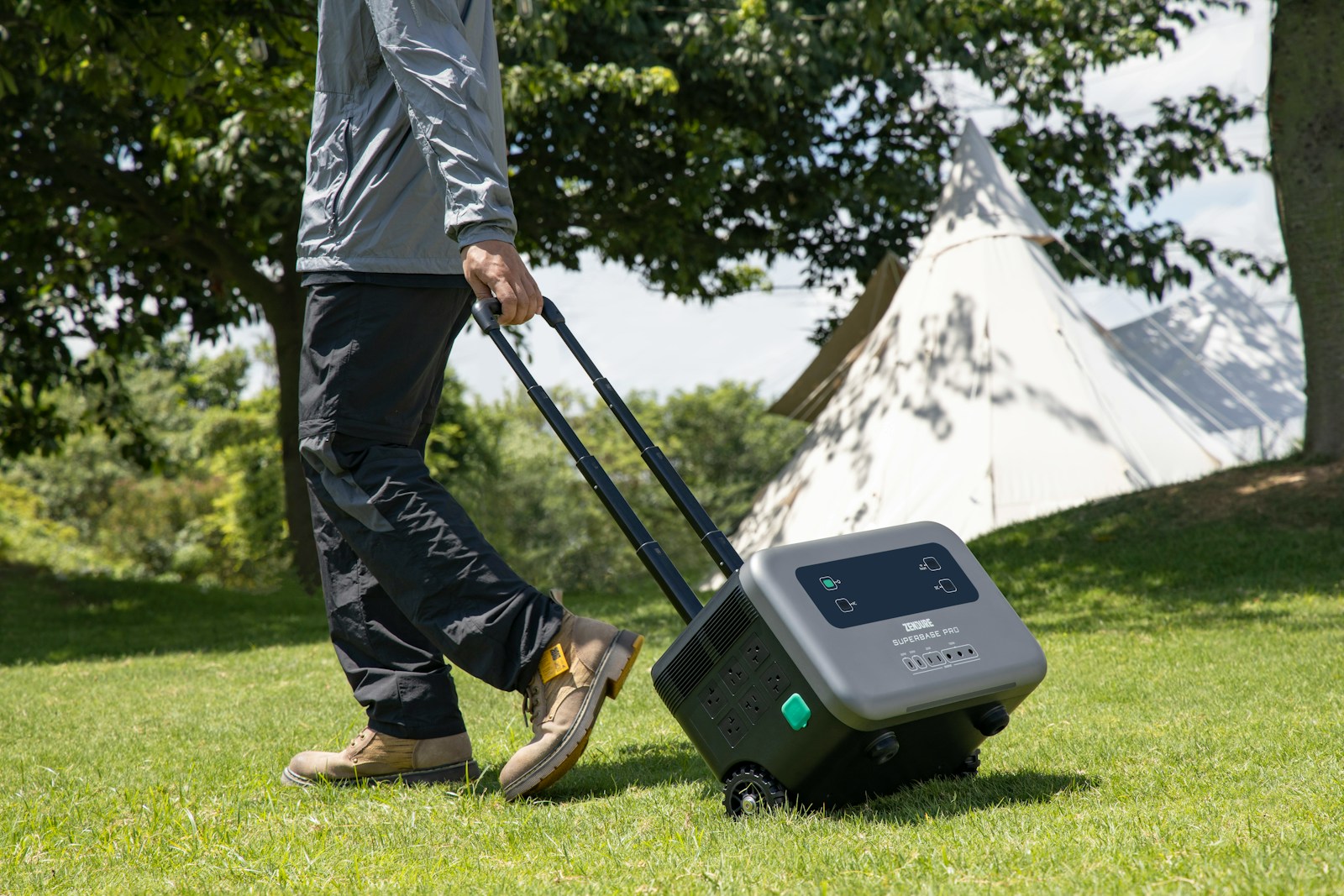
| 2000Wh | 45–60 lbs | Needs wheeled cart; not truly “portable” |
Weight composition:
- LiFePO₄ cells: ~60% of weight
- Inverter/PCB: ~20%
- Casing/fans: ~15%
- Handles/wheels: ~5%
👉 Be honest about portability needs. A 2000Wh unit stored in your garage for blackouts doesn’t need to be lightweight. But if you’ll carry it to campsites weekly, prioritize <25 lbs.
Long-Term Ownership: Maximizing Battery Lifespan
LiFePO₄ storage protocol (extends life 2–3x):
- Long-term storage: 50–60% state of charge (not 100%)
- Storage temperature: 50–77°F (10–25°C)
- Recharge to 60% every 3–6 months if unused
- Avoid full discharges below 10% (unnecessary stress)
NMC storage protocol:
- Store at 40–50% charge (higher voltages accelerate degradation)
- Never store fully charged for >1 week
- Keep below 77°F (25°C) at all times
Ignoring these protocols causes 40% capacity loss in 2 years versus 15% with proper care.
Final Technical Checklist Before Purchase
Print this and verify before checkout:
- [ ] Battery chemistry: LiFePO₄ confirmed (unless ultralight critical)
- [ ] Inverter type: Pure sine wave explicitly stated (not implied)
- [ ] THD rating: <5% for sensitive electronics
- [ ] Solar controller: MPPT confirmed (not PWM)
- [ ] Cold weather: Self-heating if below 32°F exposure expected
- [ ] Certifications: UL 2743 or ETL visible in documentation
- [ ] Cycle life: ≥2,500 cycles for LiFePO₄ units
- [ ] Warranty: Minimum 3 years (5+ for LiFePO₄)
- [ ] USB-C PD: ≥100W for laptop users
- [ ] Weight: Matches your actual portability needs
The Bottom Line: Match Physics to Your Use Case
The right power station aligns three realities:
- Your device physics (actual wattage + surge requirements—not marketing claims)
- Your environmental physics (temperature constraints, solar availability)
- Your usage physics (cycles per year determining chemistry choice)
For 90% of homeowners:
A 1000–1500Wh LiFePO₄ unit with pure sine wave (Bluetti EB70S, EcoFlow Delta 2) powers fridge + router + lights for 12–18 hours—covering 80% of U.S. grid outages (median duration: 9 hours).
For medical device users:
Never compromise on pure sine wave + 30% capacity buffer. Your health depends on waveform quality and runtime certainty.
For van lifers:
Prioritize solar recharge speed (MPPT efficiency) over raw capacity. Daily recharging beats massive batteries that stay depleted.
The final truth: No power station replaces grid power indefinitely. But the right one—chosen with technical literacy—delivers exactly what you need when the grid fails: peace of mind backed by physics, not marketing.
Disclaimer: This guide reflects February 2026 market conditions and engineering principles. Always measure your actual device wattage with a Kill-A-Watt meter. Battery performance varies by temperature, age, and usage patterns. Consult device manuals before connecting medical equipment. This is educational content—not electrical engineering advice for home wiring modifications.