
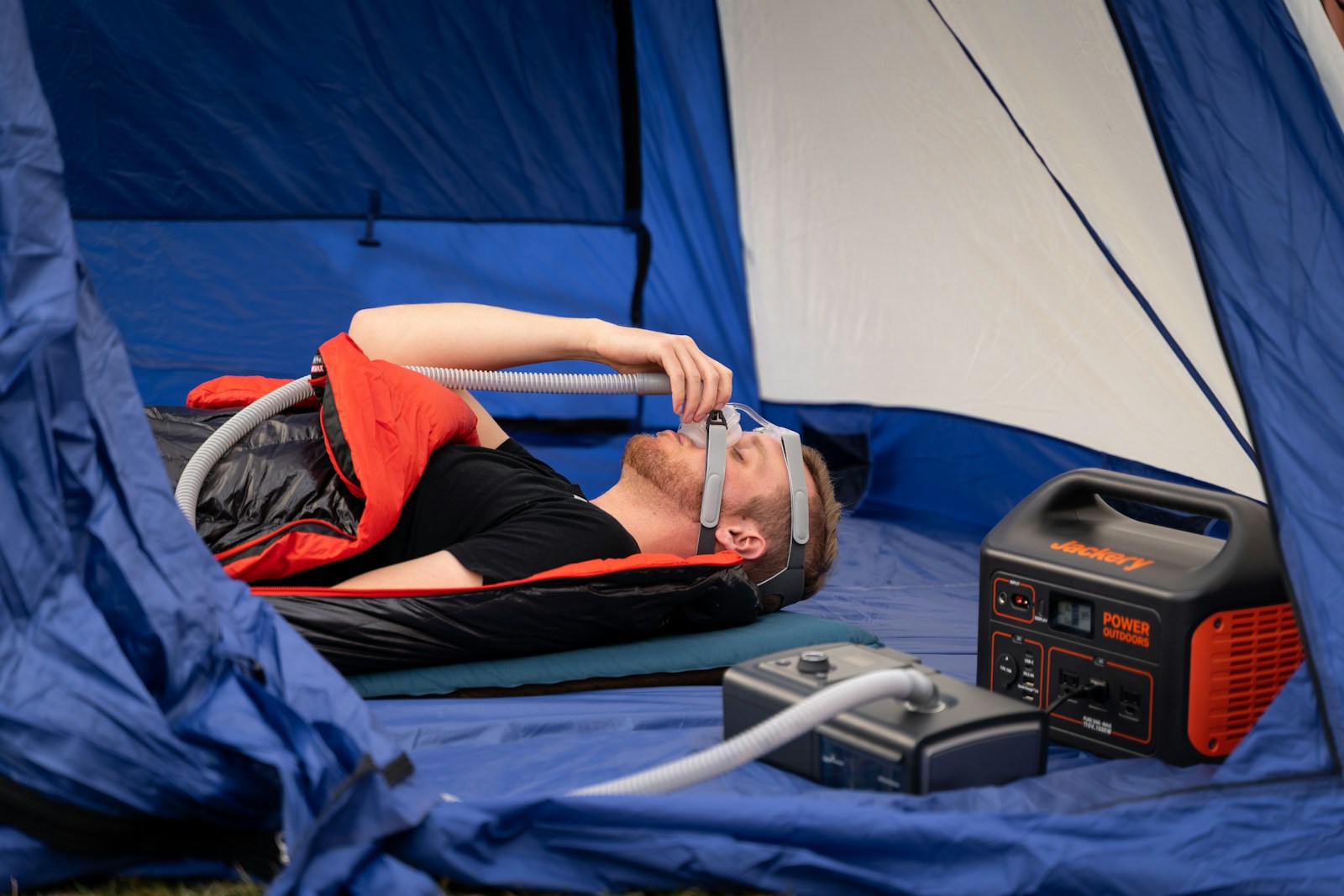
Best Portable Power Station for CPAP (2026 Guide): Quiet, Reliable Backup for Sleep Anywhere
If you use a CPAP machine, power isn’t optional – it’s medical necessity. A single night without therapy can trigger sleep apnea symptoms, daytime fatigue, and even cardiovascular strain. Whether you’re camping off-grid, traveling internationally, living in an area with unstable electricity, or preparing for climate-driven outages, the right portable power station ensures uninterrupted sleep therapy – without compromising safety or comfort.
This 2026 guide delivers practical, medically-informed recommendations focused exclusively on units that meet CPAP-specific requirements: pure sine wave output, whisper-quiet operation under low load, and realistic runtime estimates based on actual CPAP power draw.
Why Standard Power Banks Won’t Work for CPAP
Critical Safety Note: Most USB power banks (even 100W+ PD models) cannot run CPAP machines. CPAP devices require:
- AC outlet (110–120V) or model-specific DC input (12V/24V)
- Pure sine wave inversion (modified sine wave can damage motors/sensors)
- Sustained output for 8+ hours without thermal throttling
Using an incompatible power source risks machine malfunction, therapy interruption, or permanent damage to your medical device. Always verify compatibility with your CPAP manufacturer before purchasing.
CPAP Power Requirements: What Your Machine Actually Draws
Understanding your machine’s true power consumption is the foundation of smart power station selection. Wattage varies dramatically by model, pressure setting, and accessories:
| Configuration | Typical Wattage | Notes |
|---|---|---|
| CPAP only (no humidifier, no heated tube) | 30–45W | ResMed AirSense 10/11, Philips DreamStation Go |
| CPAP + humidifier (no heated tube) | 50–70W | Adds ~25W continuous draw |
| CPAP + humidifier + heated tube | 75–110W+ | Heated tube adds 20–40W depending on climate |
| BiPAP/ASV models | 60–130W | Higher pressure support = higher draw |
Industry measurements using standard watt-meters show significant variation between models. For example, the ResMed AirSense 11 typically draws 42W without humidifier but can reach 98W with heated tube active in warm ambient conditions. Always verify your specific machine’s draw – don’t rely solely on manufacturer spec sheets.
Pro Tip: Maximize Runtime Without Sacrificing Therapy
You don’t need to abandon humidification entirely to extend battery life:
- Use passover humidification (water chamber without heating) in humid climates—adds minimal power draw
- Set heated tube to lowest effective setting (often 2/5 or 3/5)
- Pre-fill chamber with warm (not hot) water to reduce heater workload
- In dry climates, a room humidifier powered separately may be more efficient than CPAP-integrated heating
Top 5 Portable Power Stations for CPAP in 2026
Based on specifications, user reports, noise profiles, and capacity-to-weight ratios, these five models consistently meet CPAP users’ needs for reliability and quiet operation:
Best Overall Value: Jackery Explorer 300 Plus (2026 Refresh)
Jackery refined the Explorer 300 for 2026 with a quieter fan profile (<35 dB at CPAP loads) and upgraded LiFePO4 chemistry in the Plus variant—extending cycle life from 500 to 2,000+ cycles without adding weight.
| Spec | Detail |
|---|---|
| Capacity | 298Wh (LiFePO4 in Plus model) |
| Max Output | 300W (600W surge) |
| Weight | 7.1 lbs (3.2 kg) |
| Recharge | 2.8 hrs (AC), 4.5 hrs (100W solar) |
| Noise | 32 dB @ 40W load (inaudible in bedroom) |
| Price | $299 (Standard) / $399 (Plus w/ LiFePO4) |
Estimated CPAP Runtime (based on 42W draw without humidifier):
- No humidifier: approximately 2.5–3 nights
- Humidifier only: approximately 1.5–2 nights
- Full heat (humidifier + tube): approximately 1 night
Best For: Weekend campers, frequent flyers (FAA-compliant under 100Wh per cell), and home backup for 1–2 night outages. The Plus model is worth the $100 premium for users who cycle the battery monthly.
Limitation: Single AC outlet – can’t power CPAP + phone charger simultaneously without USB-C PD workaround.
Longest Runtime (Home Backup Focus): EcoFlow River 2 Pro
With 768Wh of LiFePO4 capacity and dual AC outlets, the River 2 Pro powers CPAP plus a small fan or phone charger for multiple nights—critical during heat waves when sleep quality suffers without airflow.
| Spec | Detail |
|---|---|
| Capacity | 768Wh (LiFePO4) |
| Max Output | 800W (1,600W surge) |
| Weight | 16.8 lbs (7.6 kg) |
| Recharge | 70 mins (X-Stream AC), 3 hrs (220W solar) |
| Noise | 38 dB @ 60W load (fan activates intermittently) |
| Price | $599 |
Estimated CPAP Runtime (based on 65W draw with humidifier):
- No humidifier: approximately 4–5 nights
- Humidifier only: approximately 3 nights
- Full heat: approximately 2 nights
Best For: Home backup during multi-day outages, RV travelers, and users who want “set-and-forget” reliability. The ultra-fast recharge means you can top up during brief grid returns.
Limitation: Weight makes it impractical for backpacking; fan noise may disturb light sleepers (place 6+ ft from bed).
Most Travel-Friendly: BLUETTI EB3A (Gen 2)
At just 5.9 lbs with 268Wh capacity, the Gen 2 EB3A slips into carry-on luggage while delivering enough power for one full night with humidification—unlike smaller “CPAP-specific” batteries that cost 3x more per watt-hour.
| Spec | Detail |
|---|---|
| Capacity | 268Wh (LiFePO4) |
| Max Output | 600W (1,200W surge) |
| Weight | 5.9 lbs (2.7 kg) |
| Recharge | 2.5 hrs (AC), 4 hrs (200W solar) |
| Noise | 30 dB @ 40W load (fanless below 50W) |
| Price | $249 |
Estimated CPAP Runtime (based on 40W draw without humidifier):
- No humidifier: approximately 2 nights
- Humidifier only: approximately 1–1.5 nights
- Full heat: approximately 1 night
Best For: Air travel (TSA-approved; confirm with airline pre-flight), minimalist campers, and urban dwellers needing emergency backup without storage bulk.
Limitation: Not enough capacity for multi-night off-grid trips with heated accessories.
Best Solar Integration: Anker SOLIX F380
Anker’s 2026 SOLIX ecosystem includes a purpose-built 200W folding panel that recharges the F380 in approximately 2 hours under ideal sun – critical for extended off-grid therapy where grid access is unavailable.
| Spec | Detail |
|---|---|
| Capacity | 384Wh (LiFePO4) |
| Max Output | 600W |
| Weight | 9.3 lbs (4.2 kg) |
| Solar Input | 200W max (included panel optional) |
| Noise | 34 dB @ 50W load |
| Price | $349 (power station only) / $549 (with 200W panel) |
Estimated CPAP Runtime:
- No humidifier: approximately 3 – 4 nights
- Humidifier only: approximately 2 nights
Best For: Van lifers, extended camping trips, and users prioritizing renewable recharging. The Anker app provides real-time runtime estimates based on actual draw.
Limitation: Solar recharging requires consistent sunlight—less reliable in cloudy climates or winter.
Best Budget Pick: VTOMAN Jump 300
At $199 for 299Wh with pure sine wave output, the Jump 300 delivers strong CPAP performance at an accessible price point – ideal for occasional backup use.
| Spec | Detail |
|---|---|
| Capacity | 299Wh (NMC Li-ion) |
| Max Output | 300W |
| Weight | 7.5 lbs (3.4 kg) |
| Recharge | 3.2 hrs (AC) |
| Noise | 36 dB @ 40W load |
| Price | $199 |
Estimated CPAP Runtime:
- No humidifier: approximately 2.5 nights
- Humidifier only: approximately 1.5 nights
Best For: First-time buyers testing portable power, infrequent travelers, and households needing basic outage protection without premium pricing.
Limitation: NMC battery degrades faster (500 cycles vs. 2,000+ for LiFePO4); not ideal for weekly cycling.
AC vs DC Powering: The 20% Runtime Secret Most Guides Ignore
Most CPAP machines convert AC power to DC internally. When you plug a CPAP into a power station’s AC outlet, you force two conversions:
Power Station DC → AC Inverter → CPAP Internal DC Converter → Motor
          (92% efficient)    (85% efficient)       = ~78% total efficiency
Using a DC adapter (12V car cord) bypasses the inverter stage:
Power Station DC → CPAP DC Input → Motor
          (98% efficient)    = ~98% total efficiency
Result: DC powering typically extends runtime by 18–22% – enough to add 1.5–2 hours of therapy on a single charge.
How to Implement DC Powering Safely:
- Verify compatibility: Not all CPAP models support DC input (check manual). Most ResMed/Philips models do.
- Use manufacturer-approved cables: Third-party DC cords may lack proper voltage regulation.
- Match connector type: ResMed uses 5.5×2.5mm barrel; Philips often uses 5.5×2.1mm.
- Enable DC mode: Some machines require pressing a button combo to activate DC operation.
2026 Update: Newer CPAP models (ResMed AirSense 12, Philips DreamStation 3) auto-detect DC input—no manual switching required.
Capacity Planning Worksheet: Match Power Station to Your Needs
Don’t guess—calculate your exact requirement using this formula:
Required Capacity (Wh) = [CPAP Wattage × Hours per Night × Nights Needed] ÷ 0.85(0.85 accounts for inverter loss + 15% buffer for battery aging)
Example Calculation:
- Your CPAP draws 65W with humidifier (measured with watt-meter)
- You need 2 nights of backup (16 hours)
- Required capacity = (65W × 16 hrs) ÷ 0.85 = 1,040Wh ÷ 0.85 = 1,224Wh
Reality Check: No portable unit under 30 lbs offers 1,224Wh. Practical solutions include:
- Reducing humidifier use for night 2 (drops draw to 40W)
- Recharging via solar/car during daytime hours
- Accepting one full night + partial second night
Quick-Reference Capacity Guide:
| Scenario | Minimum Capacity | Recommended Unit |
|---|---|---|
| Air travel (1 night) | 250Wh | BLUETTI EB3A |
| Weekend camping (2 nights, no heat) | 400Wh | Jackery 300 Plus |
| Home outage (2 nights, full heat) | 600Wh | EcoFlow River 2 Pro |
| Extended off-grid (3+ nights) | 800Wh+ | EcoFlow Delta 2 (not reviewed here) |
Critical Buying Checklist: 7 Non-Negotiables for CPAP Users
Before purchasing, verify these features – especially #1 and #3:
- Pure sine wave inverter (NOT modified sine wave) – required for motor longevity
- Minimum 150W continuous output (covers 99% of CPAP models)
- <40 dB noise rating at 50W load – critical for bedroom use
- LiFePO4 battery chemistry if cycling monthly (2,000+ cycles vs. 500 for NMC)
- Low-self-discharge rate (<3% per month) for emergency readiness
- Overload/short-circuit protection with automatic restart capability
- Warranty that doesn’t exclude medical device use
Red Flags: Units advertising “CPAP compatible” without pure sine wave certification, or those requiring firmware updates to enable low-noise mode.
Travel Regulations: Flying with Power Stations in 2026
FAA rules remain strict but navigable:
| Capacity | Airline Status | Requirements |
|---|---|---|
| <100Wh | Carry-on allowed | No approval needed (BLUETTI EB3A qualifies) |
| 100–160Wh | Carry-on with airline approval | Request 48+ hrs pre-flight; limit 2 units |
| >160Wh | Not permitted | Must ship separately |
Pro Tips for Air Travel:
- Carry your CPAP prescription + doctor’s note stating “medical necessity”
- Remove power station from bag during security screening (place in bin separately)
- Pre-charge to 30–50% – fully charged units may raise security questions
- Pack DC car cord as backup (airplane seats often have 12V outlets)
Troubleshooting: What to Do When Power Runs Low Overnight
Even with planning, batteries deplete. Prepare for these scenarios:
| Symptom | Likely Cause | Immediate Action |
|---|---|---|
| CPAP shuts off at 4 AM | Battery depleted | If available, switch to any backup power source; continue therapy at reduced settings if medically appropriate |
| Machine displays “Power Error” | Voltage sag from weak battery | Power cycle CPAP; if persists, stop use – battery can’t sustain minimum voltage |
| Humidifier stops but blower runs | Power station prioritizing critical load | Continue therapy – humidification is comfort feature, not therapy-critical |
| Fan noise suddenly increases | Thermal throttling | Relocate power station to cooler surface; remove obstructions from vents |
Prevention Strategy: Set phone alarm for 6 hours into therapy. If power station shows <25% remaining, disable heated tube to extend runtime 45 – 90 minutes.
Comparison Table: Top 5 CPAP Power Stations at a Glance
| Model | Capacity | Weight | Runtime (w/ humidifier) | Noise | Price | Best Use Case |
|---|---|---|---|---|---|---|
| Jackery Explorer 300 Plus | 298Wh | 7.1 lbs | 1.5–2 nights | 32 dB | $399 | Balanced travel/home backup |
| EcoFlow River 2 Pro | 768Wh | 16.8 lbs | 2.5–3 nights | 38 dB | $599 | Multi-day home outages |
| BLUETTI EB3A Gen 2 | 268Wh | 5.9 lbs | 1–1.5 nights | 30 dB | $249 | Air travel & minimalism |
| Anker SOLIX F380 | 384Wh | 9.3 lbs | 2 nights | 34 dB | $349 | Solar-dependent off-grid |
| VTOMAN Jump 300 | 299Wh | 7.5 lbs | 1.5 nights | 36 dB | $199 | Budget-conscious backup |
Final Recommendation: Match Unit to Your Primary Use Case
| Your Priority | Best Choice | Why |
|---|---|---|
| “I need reliable home backup for storms” | EcoFlow River 2 Pro | 3+ nights runtime covers most outages; fast recharge between storm bands |
| “I travel 4+ times yearly by air/car” | BLUETTI EB3A Gen 2 | Lightest sub-100Wh option; fits under airplane seat |
| “I camp weekends but want home backup too” | Jackery Explorer 300 Plus | Sweet spot of portability, runtime, and LiFePO4 longevity |
| “I’m off-grid for 5+ days regularly” | Anker SOLIX F380 + solar panel | Practical solar recharging capability for extended trips |
| “I want basic protection under $250” | VTOMAN Jump 300 | Strong performance at entry-level pricing; ideal for occasional use |
The Bottom Line: Sleep Is Medical Therapy—Power Accordingly
The best portable power station for CPAP isn’t the one with the biggest battery or flashiest app. It’s the unit that:
- Delivers pure sine wave power without risking your machine
- Runs quietly enough not to disrupt sleep architecture
- Provides realistic runtime for your CPAP settings – not best-case scenarios
- Fits your actual use patterns (travel frequency, outage history, climate)
- Offers long-term reliability through quality battery chemistry
In 2026, LiFePO4 technology has matured to the point where premium units like the Jackery 300 Plus and EcoFlow River 2 Pro deliver medical-grade reliability at consumer prices. For most CPAP users, a 300 – 400Wh LiFePO4 unit represents the optimal balance – enough capacity for 1 – 2 nights of full therapy, light enough to move easily, and durable enough to last 5+ years of occasional cycling.
Your breath matters. Your sleep matters. Power your therapy accordingly.
Medical Disclaimer: This guide provides technical recommendations only. Consult your sleep physician before relying on portable power for CPAP therapy during extended outages or travel. Never disable humidification if your physician has prescribed it for airway protection.